If you’ve been told to feed your koi once a day, or once every second day, we need to stop you right there. It’s one of the most common misconceptions in koi keeping and it could be the reason your koi aren’t growing the way they should.
At Koi Empire, we’ve spent four generations learning how koi actually grow, and feeding frequency is one of the biggest factors people get wrong.
The Myth: Once a Day Is Enough
It’s an easy mistake to make. Feeding once a day feels manageable, and koi will happily eat whatever you give them — so it looks like it’s working. But koi have small stomachs and fast metabolisms, especially in warm water. One large meal a day doesn’t give them the steady nutrient intake they need to grow to their full potential.
If you’re only feeding once, or skipping days entirely, you’re likely leaving real growth on the table — particularly during summer, when koi are at their most active and their metabolism is running highest.
What You Should Actually Be Doing: Feed 3–5 Times a Day
For real, consistent growth, koi should be fed 3 to 5 small meals a day, not one big one. Here’s how to do it properly:
1. Feed Small Portions, Multiple Times a Day
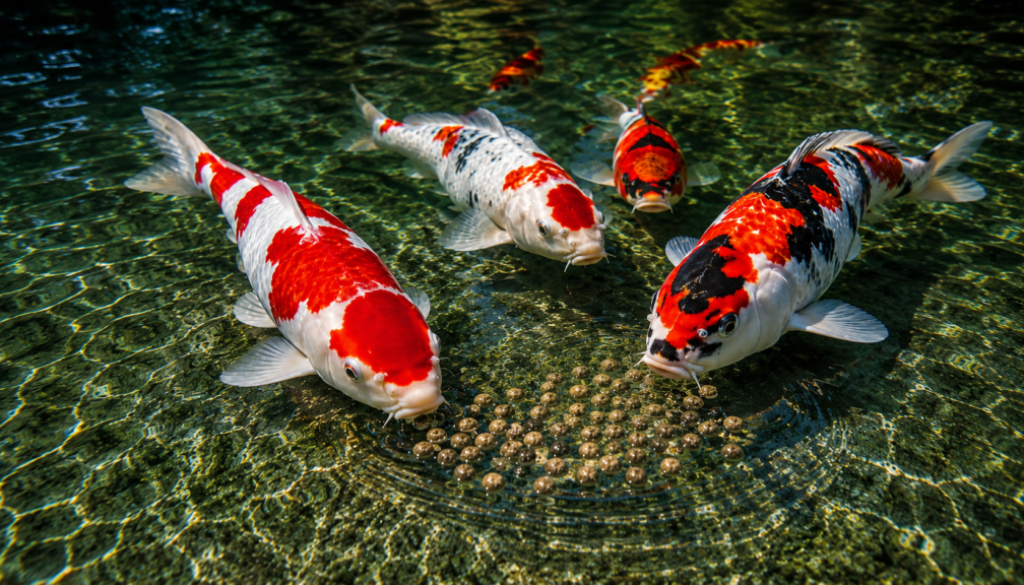
Split your koi’s daily food into 3–5 smaller feedings spread across the day rather than one large dump of food. This mimics how koi naturally forage in the wild — grazing frequently rather than gorging once.
2. Watch the Clock: They Should Finish in 2–3 Minutes
Each portion should be small enough that your koi finish it within 2 to 3 minutes. If food is still floating after that window, they’ve had enough for that round.
3. Scoop Out Leftovers Immediately
If there’s uneaten food after 2–3 minutes, scoop it out of the pond. Leftover food doesn’t just go to waste — it breaks down in the water, spikes ammonia levels, and feeds algae growth. This directly undoes the water quality work your filtration system is doing.
4. Reduce the Portion Size Next Round
If your koi didn’t finish a portion, that’s useful information — reduce the amount you give them next time. This isn’t guesswork; you’re actively reading your koi’s appetite and adjusting in real time.
5. “Play With the Feeding”
This is the part most people miss. Koi feeding isn’t a fixed formula — it’s a feedback loop. Watch how quickly they eat, how many finish first, how much is left over, and adjust the next portion accordingly. Over time, you’ll learn your pond’s actual appetite instead of blindly following a generic schedule you read once online.
Why This Matters Most in Summer
Koi are cold-blooded, which means their metabolism is directly tied to water temperature. In summer, when the water is warm, their digestive system speeds up significantly — they can process food faster and more often, which is exactly when frequent feeding drives the most growth.
This is the season to really commit to the 3–5 times a day approach. Feed light, feed often, and let your koi’s appetite guide the portions. This is how you get koi that grow bigger, faster, and healthier — the way genetically superior Japanese and Taiwanese koi are meant to.
In colder months, feeding frequency should drop significantly as their metabolism slows — but that’s a topic for another post.
The Bottom Line
Forget the “once a day” advice. Real koi growth comes from:
- Feeding 3–5 times daily
- Portions that finish in 2–3 minutes
- Scooping out leftovers immediately
- Adjusting portion sizes based on what they actually eat
- Feeding most actively during summer, when their metabolism is highest
Give Them the Right Fuel to Grow
Frequency is only half the equation — quality matters just as much. Our Qualikoi Food is a premium growth and colour-enhancing formula with 43% protein, giving your koi the nutrition they need to make the most of every feeding.